What a missed call really costs a Melbourne service business
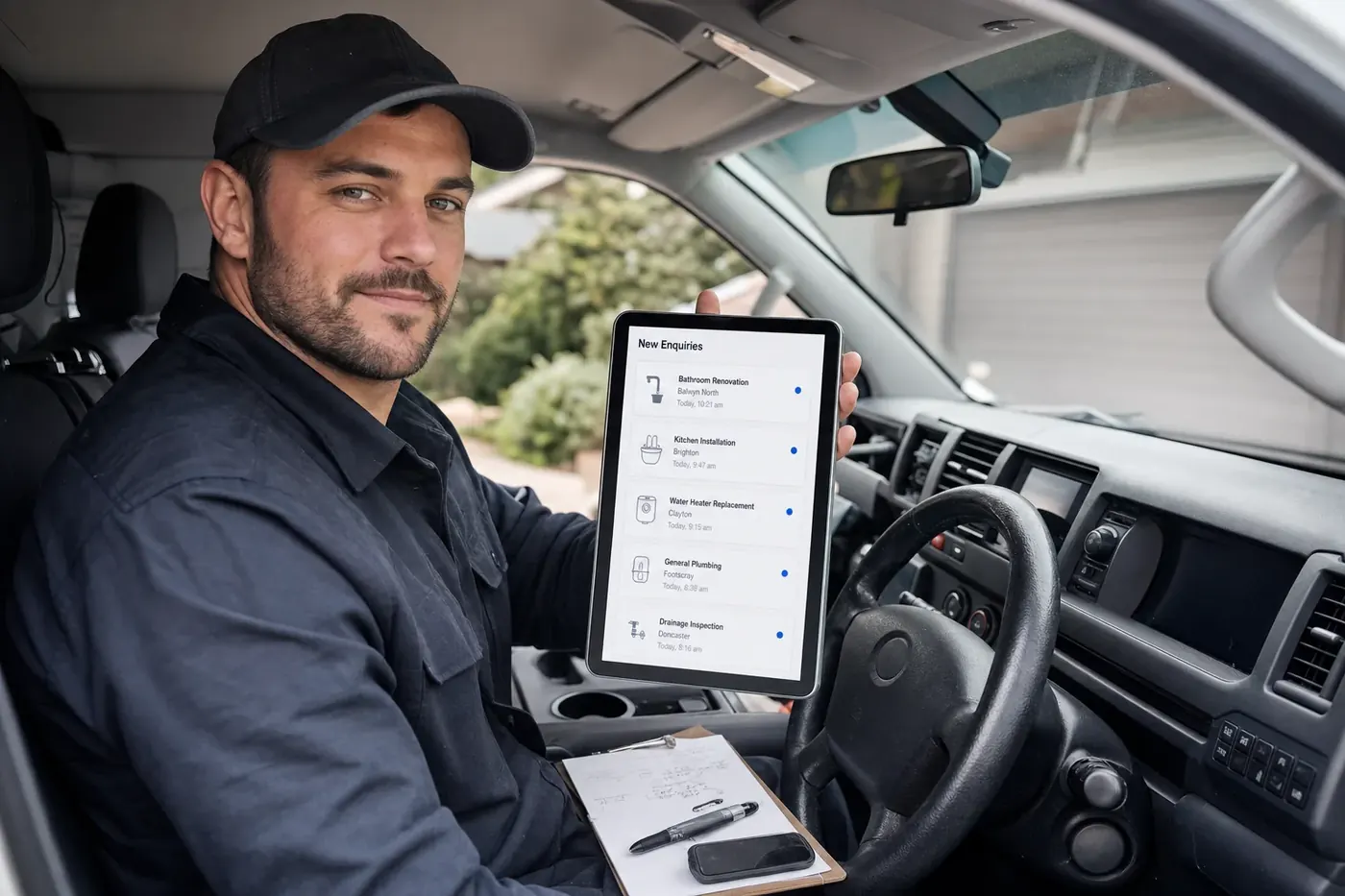
When you are on the tools, a missed call is not just one lost ring, it is often a lost job that goes straight to the next business the customer rings. The fix is not answering every call, it is an automatic callback and text that holds the customer until you can get back to them.
Summarise this with AI
Key takeaways
- Most people calling a trade are ready to book, not just browsing.
- A missed call usually means the customer rings the next business immediately.
- You rarely find out about the work you lost this way.
- An instant auto-text and callback keeps the customer waiting for you.
- Catching after-hours enquiries turns quiet evenings into booked jobs.
Why a missed call is rarely just a missed call
Someone searching for a plumber, electrician or any urgent trade is usually ready to act. They are not filling in time. They have a problem and they want it sorted today.
So when your phone rings out because you are under a sink or up a ladder, they do not wait around. They scroll back to the search results and ring the next business. The job is gone before you even knew it existed.
The part that stings
You never see the work you lose this way. There is no missed enquiry in your inbox, no voicemail, no record. It just quietly went to someone else.
The real cost adds up quietly
One missed call now and then might not feel like much. But across a busy week of being on the tools, those rings add up, and every one of them was a real person ready to book.
- The job itself, lost to whoever picked up next.
- The repeat work that customer might have brought later.
- The referrals they would have passed to friends and neighbours.
- The marketing you already paid for to make that phone ring.
That last point is the one most businesses miss. If you are paying to generate enquiries, a missed call means you paid to make the phone ring and then handed the result to a competitor.
How to stop losing the job
The answer is not to drop what you are doing for every call. It is to make sure a missed call triggers an instant response, so the customer feels looked after instead of ignored.
- An automatic text fires the second a call is missed.
- The customer gets a friendly message saying you will call straight back.
- They wait for you instead of dialling the next business.
- After-hours enquiries are captured rather than lost overnight.
Why the text matters
A quick automated message buys you time. Most people are happy to wait a short while if they know they have been heard. Silence is what sends them elsewhere.
Frequently asked questions
In practice they tend to prefer it. A short message that says you have seen the call and will ring back reassures the customer that they have reached a real business. The alternative is silence, which is what pushes them to call a competitor.
After-hours enquiries are some of the easiest to lose and some of the easiest to win. An automatic callback and text means a call at 7pm is captured and followed up, rather than disappearing until the morning when the customer has already booked someone else.
No, it backs it up. The goal is that no enquiry slips through when you genuinely cannot pick up. When you can answer, you answer. When you cannot, the automatic response holds the customer until you can get back to them.

Written by
Jacob Frecklington
Growth and Performance Director
Jacob Frecklington is a digital marketer specialising in local SEO and lead generation for trade and service businesses across Australia.
He got into SEO and web development early, building websites and running campaigns for local businesses while still finishing school. That start meant learning what actually moves the needle for small operators from real campaigns rather than from a textbook.
His focus is on building high-performing websites, managing local SEO strategy, and making sure the digital assets we create translate directly into leads and booked jobs. The principle behind all of it is a simple one: if it does not generate enquiries, it is not doing its job.
More insights
Keep reading
Exclusive vs shared leads in Melbourne: what you are actually paying for
The real difference between a lead that is yours and one sold five times over, and how to tell them apart.
Read articleKeep reading
How much should a Melbourne service business pay for leads?
Why cost per lead is the wrong number, and the one figure you should actually be measuring.
Read articleKeep reading
SEO vs Google Ads for Melbourne leads: why we lead with SEO
Ads rent you enquiries. Organic search earns them. Here's why we build leads with no ad spend.
Read articleTell us your trade and your suburbs. We'll do the rest.
Book a free strategy session and we'll show you exactly how The Melbourne Lead Program would generate enquiries for your business. No obligation.